
PVC film for interior door production
GREENWOOD decorative PVC films for interior door manufacturers. Use this page for vacuum or membrane pressing of shaped door panels, and for profile wrapping or lamination of flat door skins and components.
Request a physical sample or the Doors Format catalogue, then test the selected article on your own production line before ordering.
Where PVC film is used in interior door production
An interior door is not one part. Film specification follows the component, the substrate and the process.
- Routed MDF door faces — shaped surfaces and CNC-routed grooves can be finished by vacuum or membrane pressing.
- Flat door skins — flat or lightly profiled surfaces can be laminated where the line and the selected film are suitable.
- Door frames and profiles — linear profiles can be covered on a continuous wrapping line. See PVC film for profile wrapping.
- Architraves and mouldings — matching film can coordinate the door face with surrounding trim.
The correct article depends on substrate, geometry, forming depth, adhesive system and processing conditions. Test a physical sample on the actual production line before approval.
Choosing PVC film for a door is not only about thickness
Around 0.35 mm is commonly used on vacuum and membrane presses for routed MDF door faces. Around 0.18 mm is commonly used for profile wrapping and flat door-skin lamination. Thickness is one selection parameter — not a rule that a deeper groove is solved by a thicker film.
For a routed door face, review together: routing depth and geometry; edge and corner radii; machining and surface preparation; adhesive system; heating, vacuum or membrane pressure, cycle time and cooling; and the specific article, not thickness alone.
Confirm the article for your part and test it on your line before a production order.
Doors Format catalogue — 0.18 mm films for door programmes
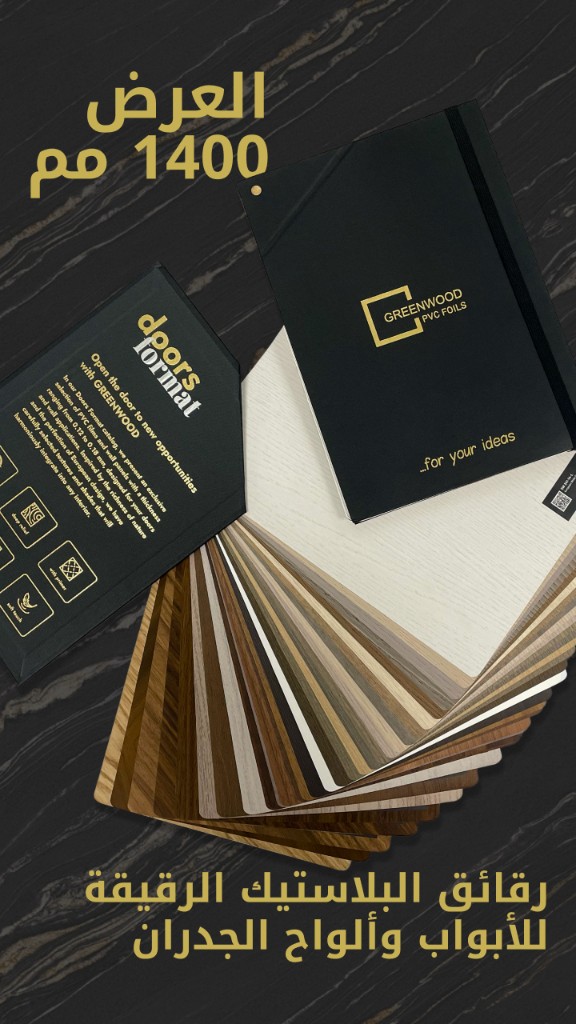
Doors Format is a physical GREENWOOD catalogue of 0.18 mm PVC films assembled for interior door manufacturers: skins, frames, wrapped profiles and matching trim. It is the 0.18 mm door programme — not the vacuum-press 0.35 mm family shown on many article cards below.
How GREENWOOD looks on doors
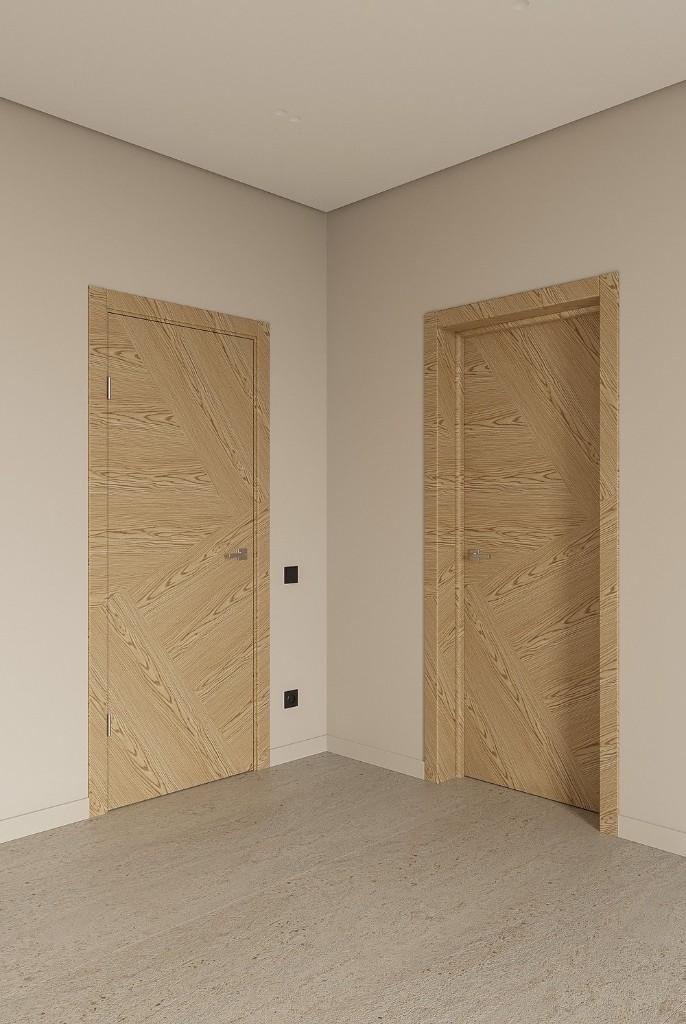
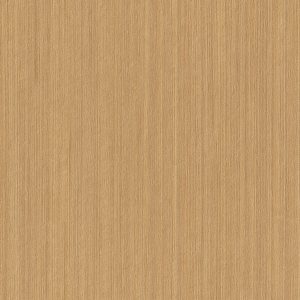
Decor sample next to finished door faces — so you can picture the surface in production. Screen colour is not a production approval; request a physical sample.



Selected decors for interior doors
Starting points from stock-facing articles — not the full catalogue and not the Doors Format 0.18 mm book. Open a card to review thickness and width as shown on the article page.
Decors for Interior doors (24)












How PVC film is applied to routed MDF door faces
A typical membrane-pressing sequence starts with an MDF door face machined to the required profile. CNC routing creates grooves, panel details and edge geometry. The substrate is prepared, an adhesive system is applied, and after the required preparation stage the PVC film is positioned over the part.
Heat makes the film formable. Vacuum and/or membrane pressure draw it over the face, into routed details and around suitable radii. After pressing and cooling, excess film is trimmed and the component is inspected around grooves, edges and corners.
Temperature, pressure, adhesive application and cycle settings depend on the film, adhesive, press, substrate and part geometry. Do not copy another factory’s press parameters without a production trial on your own line.
Think beyond the door face
For a coordinated door programme, the decorative surface is not limited to the main face. Frames, architraves, mouldings and wrapped profiles may need to work with the same decor.
When planning a new range, consider the surface together: door face → frame → architrave → moulding or profile. Tell us which components you manufacture and which processes you run — we can suggest GREENWOOD articles to test together.
If a pressed door does not look right
A poor result after membrane or vacuum pressing does not automatically mean the PVC film is defective. The result comes from the system: film, substrate, machining, adhesive, application, press settings and part geometry.
Symptoms worth investigating include lifting around edges or routed grooves; incomplete forming into deep profiles; surface irregularities or substrate show-through; wrinkles around corners; unexpected gloss or texture change after heating; inconsistent bonding across the same face.
Start from the actual part, film article, substrate, adhesive and press conditions — rather than changing several variables at once. Send production details for review.
From a door factory in Muscat
A door factory in Muscat ordered GREENWOOD PVC decorative film. Quantity and specification belong to that order — they are not a catalogue rule for every factory.
Read the Muscat note. For a similar programme, request a physical sample, then check stock from Sharjah.
Before you request a sample
Read the PVC film production basics before your first line test.
Tell us four things about your door production:
- What are you producing — door face, skin, frame or profile?
- What substrate are you using?
- What process — membrane press, vacuum press, wrapping or flat lamination?
- Is the part flat, lightly profiled or deeply routed?
Send those four points — we suggest GREENWOOD articles to test on your line.
Colours on screen may differ from the physical film. Confirm with a sample before production.
Supply outside the UAE
Do you supply PVC film to Saudi Arabia, Oman and Bahrain?
Yes. Our stock is held in Sharjah, UAE. We supply manufacturers across MENA. Send your country, decor code if known, required quantity and delivery location — we confirm whether we can fulfil your request.